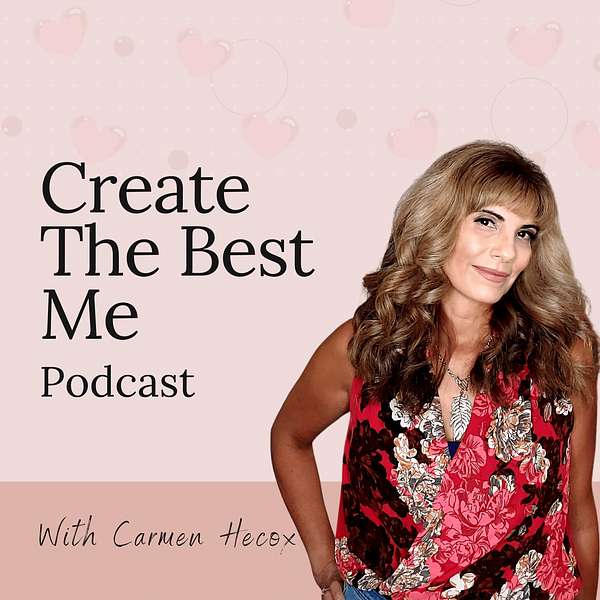
Create The Best Me
We're an age-positive podcast that celebrates the richness of midlife and beyond. Hosted by Carmen Hecox, a seasoned transformational coach, our platform provides an empowering outlook on these transformative years. With a keen focus on perimenopause, menopause, and post-menopause, Carmen brings together thought leaders, authors, artists, and entrepreneurs for candid conversations that inspire and motivate.
Each episode is packed with expert insights and practical advice to help you navigate life's challenges and seize opportunities for growth, wellness, and fulfillment. From career transitions and personal development to health, beauty, and relationships, "Create The Best Me" is your guide to thriving in midlife. Tune in and transform your journey into your most exhilarating adventure yet.
Create The Best Me
He Gave Up His Badge to Paint | The Results Are Insane
Is it too late to reinvent your life and pursue your deepest passion, or is the real risk waiting for “someday” that never comes?
In this episode, I sit down with a guest who walked away from the security of a police badge, pension, and career to chase his lifelong dream of becoming a full-time artist. His courage, setbacks, and breakthrough moments will inspire you to rethink what’s possible, no matter your age or skill level.
We dive into the emotional rollercoaster of trading stability for creativity, the practical steps you need to put momentum behind your ambitions, and the mindset shifts that flip self-doubt into opportunity. If you’ve ever felt like your window to create has closed, this conversation proves it’s wide open and waiting for you.
5 Key Lessons:
- It’s Never Too Late: Whether you’re 30, 50, or 80, transformation is possible when you commit, schedule, and start. The “window” is always open if you’re willing to walk through it.
- Talent Is Built, Not Given: Replace “I’m not talented enough” with “I’m not talented enough yet.” Skills, knowledge, experience, and creativity are learnable and limitless.
- Master Your Craft, Find Your Village: Success comes from honing your technique and choosing the right market for your work. Understand the difference between commercial and institutional art worlds and plant your flag where it fits.
- Fail Forward On Purpose: Don’t fear failed attempts; they’re essential to breakthroughs. Give yourself permission to experiment, flop, and learn.
- Surround Yourself With Believers: The mindset of those around you matters. Find, learn from, and connect with people already living your dream and watch your courage and results grow.
Music:
Title: Ambient Music by MomotMusic
Call To Action:
Ready to take your next step? Learn more and grab your first five free chapters of “You Can Sell Your Art” down in the resources.
👍 Like, comment, and share your biggest takeaway below! 👉 Don’t miss next week’s episode, another amazing conversation created just for you.
📕 Resources:
https://createthebestme.com/ep150
https://www.timpackerartacademy.com/site/about
Get 5 Free Sample Chapters of “You Can Sell Your Art” https://www.timpackerartacademy.com/book-sample
https://www.youtube.com/@timpackerfinearts
Related Episode:
🎧 Listen to this episode:
https://www.buzzsprout.com/1949561/episodes/17707610
#TimPacker #ArtBusiness #30MinuteHabit #MidlifeTransformation #CreateTheBestMe #TimPackerFineArts #CareerPivot
📨 Newsletter:
https://createthebestme.com/newsletter/
👀 Connect With Me:
Website: https://createthebestme.com
Facebook: https://www.facebook.com/createthebestme
Instagram: https://www.instagram.com/carmenhecox/
TikTok: www.tiktok.com/@carmenhecox
YouTube: https://www.youtube.com/@createthebestme
LinkedIn: www.linkedin.com/in/carmen-hecox
📽️ Video Request:
Today's guest got a day off from the precinct just to draw retirement caricatures. Yet the scariest thing, Tim Packer ever did wasn't a police raid. It was turning in his badge and cashing in his pension to paint. Stick around because by the end you'll have the 30 minute momentum hack Tim used on days when he questioned his decision to becoming a full-time artist. The one word tweak that flips, I'm not talented enough on it's head. A map for choosing the right art village so you're not selling masterpieces to the wrong town. And the gut check question, Tim asked himself when he thought he might not make it one that could change your next seven days. Let's jump on in. Tim Packer, welcome to Create the Best Me. This is an honor, a privilege to have you on the show. Oh, thank you so much. It's a pleasure to be here and I'm really looking forward to our conversation today. So, Tim, before we get into today's conversation, could you please tell the listeners and viewers a little bit about who Tim Packer is and what he does? Okay, well, I can tell you who I am now, and then I guess we'll be spending a lot of time about how I got here, which I think is also great for your show because it's about transformation. But yeah, right now I could say, i've just finished my new book, You Can Sell Your Art. And I'm a have been a very successful artist, a painter. And my last five years have really been focused on changing my focus to just cranking out more paintings and making lots of money to actually helping aspiring artists. So in 2020, I created the Tim Packer Art Academy online. And I have a number of courses there, as well as a mastermind group. And then now I've just finished writing my book, which is called You Can Sell Your Art. Which is a step-by-step plan to help people make a livable income from their art. But yeah, I didn't start out I shouldn't say I did start out as an artist but there was a 20-year kind of, uh, hiatus where I was on the police force and, uh, then struggling. So, yeah, right now I'm living the dream, but it wasn't always that way. So, Tim, I was on your website last night and looking at it, and I saw that initially you started out as an artist. And you weren't making ends meet, and so you decided to become a police officer. Tell us about that transition. I knew when I was a kid, I wanted to be an artist. I took graphic design in college and I thought I was gonna come out and be this illustrator and live the dream. And after three years, I'd only had, I'd had three different entry-level jobs with just kind of mind-numbing, soul-sucking work. I got laid off of all three. And I could look around and I could see people who were much more talented than me. And I just came to the realization that I'm, I'm just not talented enough, to kind of get to be where I want to be, to do the kind of work that I want to do. And I had an uncle who was on the police force, who was married to my mom's youngest sister. So he was only about eight years older than me, and he was a cool guy. And I was at a family party I just got laid off as an artist. And he said, have you ever thought I would join the police force? And I said, no, never. At the time I had like long hair and a beard, what you would think an unemployed artist would look like. And he said to me, I think you'd enjoy it and I think you'd be good at it. Uh, and I still said, not interested. And then this was back in 1982 and he said, but if you get hired within three years, you'll be making over $40,000 a year. Which that was a family income. And I was only 21 years old. And so I said, well, tell me more about this. And, by the end of the night, he had me convinced to go down and put an application in. So I went down, put the application in. It was very long process. And then a bunch of my friends from art college were all moving out to Calgary'cause things were booming there while it was a recession here in Toronto and they were moving out on New Year's. And so I thought, I'm gonna just leave this up to fate if I don't get hired, by New Year's, I'm going. If I do, I'm staying. Well, I was sworn in on December 29th. And then I went on to have a very successful career and found out that I was really, really well suited to be a police officer. I really enjoyed it. I ended up getting the, uh, honor student award for over 2000 recruits that went through the police college. And that made me really think, well, I guess this is what I'm supposed to be doing. But I always, I always loved art. Art was the only thing that I really, really loved and had a passion for. I liked my job as a police force and you know, I enjoyed it, but I would still rather have my days off than go into work. And I just really didn't do any art at all for about 10 years. And then in my thirties, tragedy happens as it often does, a friend of mine, a police officer, was killed in the line of duty. He was like the same age as me. And my plan all along had been, I'll do my 30, 35 years on the job, and then I can get back to art when I retire. And then when my friend was killed, all of a sudden you realize, well, that's not necessarily a good plan and there's no guarantee. And then I just realized, you know, like I was an artist, but I was not painting. And I always knew that's who I was; I was an artist. But most of the people who knew me didn't even know that about me. And that just that experience really made me think, you know what, I need to get back to what it is that I'm really passionate about. So, I got back to getting serious about my art and I did a lot of research about, okay, if I wanna get good at my art. And even at this point, there was no thought that I'm gonna quit the police force to paint. It was like, well, I at least want to be ready when I retire, that I already have like, maybe a, an art business going, or I'm capable to, you know, to do that. And so I found a lot of things you know, you need to paint three times a week just because it's cumulative, just like working out, right? You can't go work out once every three months for a whole weekend. So I started scheduling my painting time first I started focusing on the things that I knew I wasn't good at it; needed to improve. And the effect was like immediate and dramatic, and I got much better within a few years. And then by 1999, my wife and I decided that we were gonna take the chance I was gonna quit my job, cashing my pension to paint full-time. And, that was like I say, in 2000. And then over the course of the next 20 years, I just had a very, very successful career, kinda living the dream. And I ended up mentoring a couple artists during that process that went on to great success. That really made me realize, okay, I know how I got here. And I also have to go back to when I said I wasn't talented enough to be an artist. I was a hundred percent right if I just added the word yet, on the end of it. I wasn't talented enough yet. And I realize now that talent, you know, talent's not something we're given, talent's something we develop. And so I mentored one young artist by the name of Brooke Cormier, young girl. She was a daughter of a friend of mine, and now she's like an international superstar in the art world. And then social media. And I've been running my YouTube channel since about 2015, just doing it as a kind of passion project to kind of give back to art, which had given me so much. And then in 2020, I contracted Graves Disease; my thyroid, went crazy. I almost died twice. Two different times I was lying in the gurney in the hospital, not sure if I was gonna make it through the next few minutes. And a couple things came outta that. One of them which, I was very thankful for is I didn't feel afraid, I didn't feel terrified, none of the negative feelings. I just had this overwhelming feeling of gratitude. Just think like you know, my wife was there and I was thinking, oh my God, like this is gonna be hard on her. This is gonna be hard on the boys, but if this is it, thank you. Like, I thought, yeah, at that point I had been given so much more in my life, than most people in terms of just happiness, and achieving all my dreams. And then I ended up coming through both those. But then there was one small regret and that was that I had only ever treated the teaching as kind of a, a passion project with whatever spare time I had to put into it. And over that year, as I wasn't sure if I was gonna recover or not, just decided that if I get better, I am going to shift my focus to teaching and sharing everything I've learned, so that other people can have that same experience.'Cause I do think that we're all gonna be at that stage of our life where it's like, okay, this might be it. You wanna be there with a feeling of gratitude and not regret. And I know there's so many people out there that just dream of being an artist, whether it's just being very, very good as a hobby or actually as a profession. But most of them don't know how to get there and I can help them. So that's when I decided to start my art academy. And uh, yeah, it's been going great since then. So let's, let's go back. When you became a police officer and you were actively police officer; did you ever think about art during that period of just working? There was about a seven year period where I didn't do anything, and then I started doing caricatures. That's, it just, the itch is there. So I'd be doodling, you know, kind of doing caricatures; and then people became aware of this. And so then it came to a point where anybody was gonna be retiring or getting promoted or whatever; I would do a caricature, like a card for them. And then it became big half sheet watercolor caricatures where say it was a retirement party. At the party, I would have the watercolor matted and everyone would come in the back room and sign it, and then we'd pop it in a frame and give it to them. And it got to the point that I was being given a day off work to come in and do the caricature if it was like a inspector or sergeant or someone that was leaving. So I did do that. And then the Toronto Maple Leafs had a charity fundraiser for Variety Village, one of the big charities here. And they asked me to do a caricature that showed a bunch of the Toronto Maple Leafs and like the poster child for the charity. And I did that and that turned out really well. And so then the next year I said, well, let me do like a realistic kind of sport print type painting of some of the Maple Leafs. And I did that, and then that sold for like $3000 at auction. They did limited edition prints. And then over the course of the next couple years, I did several of those. And then they've eventually, I think the one of Wendel Clark sold for like $5,000 at auction. And so that's when my wife started thinking, okay, I think maybe, you know, we should start. And this was at the time too where I'd made the decision to get back serious about my art. So I was getting better and better. And then that led to me getting a lot of portrait commissions. So I had a very busy side hustle going on, uh, in 1999. And I'd been elected as a, a member of the Canadian Society of Painters of Water Colour. And I was a senior signature member of the Canadian Institute of Portrait Artists. So I'd achieved a fair bit of validation that okay, I was doing pretty good. But it was still the scariest thing I ever did in my life. I used to wake up in a cold sweat before I left when it was getting close and just thinking, oh my God, like, what am I doing here? I'm walking away from a great job pension. But yeah, it turned out to be one of the best decisions I ever made. Because that's what I was gonna ask. That's what I wanted to get to, is did you have fear? You know, in, I mean, 'cause being a police officer is a scary job one. But you know, thinking about, geez, you know what, I've always dreamed about doing this. But I fear because you, you tried before. I fear I will not be able to put food on the table. I will let my family down. That was the biggest one. And also thinking that this was, thinking that, I remember thinking that, you know, this was my one chance to grab at the brass ring. And if I don't do it, then that's off the table. And I realize now that's not true. It's not like you have one chance to achieve your dream, but I was going at it kind of an all or nothing. But I am a believer in risk, but I'm a believer in smart risk. And I think to be any kind of an entrepreneur, particularly if you're an artist, you're an entrepreneur, is like the, the number one kind of goal is to keep playing the game. Simon Sinek talks about the infinite game. The goal is to be able to get up tomorrow and still be able to be a full-time artist. Then the next day and the next day and the next day. And so one of those things is to mitigate risk. Never take a risk that's gonna take you totally out of the game where you're gonna have to sell your house or lose your house or whatever. So my wife had a very good job, she worked for one of the major banks in Canada and had a good job. And I also, I was a detective in the commercial crime unit at the time. And I'd had the month long computer crime course at the RCMP college, which in 1999 was a huge skillset that was very valuable in the private sector. So I knew that if this didn't work out, I could get a job. And when we made the decision, my wife and I had a very serious conversation and she's the one that actually suggested that it was time. But she said, you need to make me a promise first. She said, I think that this is gonna be in the best long-term financial interest of our family, that you potentially could make a lot more money as an artist than you are as a police officer. But she said, you need to promise me if we do this, that if it ever becomes clear that that's not ever gonna happen, that you'll put on a suit and get a job. And I knew I had a skillset that would allow me to get a good job. But it was still, I faced a lot of very scary situations and scenarios on the police force. The scariest thing I've ever done in my life was quitting my job and walking away from my pension without a doubt. I think it's funny that a lot of women in midlife think that they've missed that window. That window of opportunity that you talked about a couple times right now during our discussion here. And that your wife pushed you to the window was right there. Yeah. Take it. And it's it it, it's crazy too because, we see young people who are like pretty good artists, you know, in high school. And if they go, and especially if they take a program that really focuses on teaching them the fundamentals and skills and that we can see them in four or five years go from pretty good to absolutely amazing. And you can do that from 55 to 60, from 65 to 70. I've got some people in my art academy who were in their eighties and have finally just decided, I am gonna actually allow myself to pursue this. And try to become the best that I can be. And it's never too late. For those, I'm sure there's a number of people of your audience that are artists; and it's funny, I say to people all the time, we are one of the luckiest group of people because if your passion is hockey, you know, you got a very short window. You need to be playing at a certain level by the time you're 16 years old, or it's just never gonna happen, right? Even if you want to be a singer, well, you're limited by your vocal chords. But if you wanna be an artist, if you have that passion all of the stuff that's involved is learnable and it's teachable. And so there's no limitation on when you kind of pick that up and how far you can go. I always say to people you're never limited by where you start in terms of where you could become because it's all learnable stuff. You're just limited by how passionate you are about it, how much you want to get better, and whether or not you're willing to do the work. And I think it's so interesting that you mentioned that, you know, one day you started doodling and you just started doodling. And I think that most people would say, well, they would've made him a sketch artist. You know, somebody that people go in and say, he had a nose like this and eyes like this. But it doesn't sound like your career ever took that, that, uh, spin or turn that corner. It was more like, oh, you know what, so and so's retiring; you know, we'd love something more personable? And it was kind of, I mean, I don't think you weren't paid to do this, it was just more of a, something, gift to share with somebody on their way out. And that was actually a conscious decision. I was lucky that once it became aware that people became aware that I had this talent and also that I'd gone to school as a graphic designer. I had a staff inspector at our station who actually also was a serious artist, and he called me in just to talk to me about this and he said, you know, there's two options here, he said, they'll probably wanna put you in the Ident bureau where I would do exactly like what you were talking about. But he said, then that ends up sucking all of the creativity outta the "creative well doing" that stuff. And, and you'll be very limited about what you can do as a police officer, 'cause once you're there, that's where you're staying, he said. Or you can really just focus on the police side of things and do all the squads and all that other stuff and keep your art separate. And that way you'll have, if you really wanna develop your art, you'll come home from work, eager to paint. If you're at work doing an ident sketch or whatever, you're gonna be drained when you get home. So I made a conscious decision early on not to go down that route. I didn't want to be a police artist. I wanted to pursue my art on my own time doing what I wanted to do. What did you and your wife do to prepare yourselves financially to take that leap? You know, did you start to cut down on some of the expenses so that it gave you a little bit of cushion when you did make that leap, you know, things wouldn't be so tight. We had all, again, my wife was a banker, so that was very, very fortunate. So we had already been very responsible, in terms of putting money into our RSPs, which I think that's like the 4 0 1 Ks down there. As well as saving, as well as, you know, trying to, as much as we could kinda limit our expenses. But we also made the decision that, okay, if need be, we're gonna tighten the belt for a few years. So, that's what we did. And it wasn't like I left and experienced this amazing success for the first five years, it was a real struggle. Because well I started out as a portrait painter thinking that's what I was going to do, only to realize after the hundredth time of painting someone else's people the way they wanted you to paint them. Working on paintings you never would've painted and didn't even wanna paint that, I hated being a portrait painter. And that's a horrible realization three years after you've walked away from your job and your pension. And then I had to figure out, okay, I need to find out what it is that I wanna paint, that I can also make a living at that people love enough to generate an earnings for me. And eventually after five years, was able to come upon the style that I'm known for now. And then things just took off. I went from, you know, making$28,000 in a year in 2004. And in 2005, the first show that I had with my new work, I did 28,000 in sales in a weekend. And then I quickly went within, four years, I think I was making like $180,000 a year from my art. And it was only because the price of my art kept going up. Because you know, when the demand gets higher, then you can, you just keep raising the prices, raising the prices, raising the prices. But it was that five-year journey to actually find my voice. That's most of what I teach in my art academy; the initial stages is how you go from that, just loving art and even if you have the skills, how to find your voice. Where you love the work, where you love going into the studio every day and enough of the public loves the work that you can actually make a living from your art. And there were some very specific things that I did and I share that with students about how to go about doing that. Rather than just, I mean, you could go into your studio and push paint around for 50 years and never find that. And that's actually what unfortunately happens with most artists. And I think about that because I know like sometimes, when I go to some of the bigger cities like New York or San Francisco or even, you know, down in southern California, you know where you have these people that are painting. And I look at them and I'm like, oh my gosh, they're amazing. Their stuff is so good. Why are they sitting here on a, on a sidewalk painting? How do you get to your level? Or even, like, let's say if somebody likes to do interior, you know, they love to stage homes, you know, that's a certain art. But they're working as a banker, you know, because this is what pays the bills, gives you that security, the insurance and everything. How does someone make this passionate, talent into something that others can also appreciate and will pay top dollar for? How, how does someone go there? Well, the first thing is actually understand the art world. And that is, there is no one unified art world. It's like a bunch of different art villages. The biggest problem is people end up conflating them all into one and taking stuff from one village and trying to apply it in the other. So the one the village of publicly funded galleries and a lot of institutional universities and that is the village where postmodernism dominates so that's where it's all about what the artist felt. That's where you have installations. That's where you have the meet dress. That's where there's a 10 page treaties on what the meaning of the painting is. And in that village, critics and curators decide what is good art. Artists get paid through grants and through funding, that's one whole village over here. And in that village, skill is really not that important. It's often actually kind of denigrated, it's seen as craft. And so artists are out there doing this kind of thing, and then trying to sell their work. But the problem is, the majority of art commerce that goes on is people actually buying paintings to go in their homes, or to go in their offices, or prints of works, or whatever. And that's the village I call the village of commercial sales. That's with real people actually buying an artist's work because they wanna take it home and hang it in their house, hang it in their office. And despite all of the push in the academia over the last 70 years of postmodernism, what study after study has found and actually sales, bear this out is the average person still values everything that's been important in art since the Enlightenment. Things like skill, things like craft, things like beauty, which is pretty much totally looked down upon in the institutional side of things. And so that's the first thing artists need to understand is which village they wanna be in. And for most people, I think, when they start getting interested in art, it is that village. The village that I'm in; the village of commercial sales. It's like where you get up, you go into your studio, you create work that you love, and there's an army of fans who are appreciative of your work, who wanna buy your work and wanna hang it in their homes. And so the first thing there is realizing, okay, I guess I need to master all of the skills. I need to master all of the concepts, right? I can't just push paint around. I can't tape duct tape a banana to the wall and you know, in that other village, that duct tape banana to the wall might, in fact, win an award. But in this village, it's like, no. So it's, it's going back to the kind of classical art training of mastering all the skills, mastering all the concepts. And then here's the important most artists just stop there. And there's two keys that I feel are really important to an artist getting to that point where, like, 'cause when you find your unique voice where you love it and the public loves it making a living as an artist is easy. Until you do that, it's virtually impossible. So the key is you keep searching until you find that. And one of the ways that I found is best to do that for artists is to seek out influences. And I found this just from you know, I love music too. And I always found that the musicians of the bands that I loved the most, they had all of these influences. It's like, well I grew up playing the piano and classical and then I was in a punk phase, and then, oh, I love listening to country or jazz or whatever. And then they bring all of these things together to create their own unique sound. And so that's what I did as an artist was look for artists whose work just made my jaw drop, where I go, oh my God, I love that. And then, as an artist, the next thought that automatically comes is, I'd love to be able to paint like that. And so then I would go about doing that. It's like, okay, well, let me first of all try and figure out what's their filter. What is the disconnect between the actual world and the way that they paint? And I use Van Gogh as an example of this 'cause everybody knows him. It's like he just translated the world into strokes of color, that was his filter. And it's like, okay, well you could try doing that. And then what I would do is I would try doing my own paintings using that same filter, the same techniques until I had learned enough about it.
And what you wanna learn is three things:It's how much you love the process, how much you love the finish work, and then what's the response of other people to the finished work, do they love it? And then once you've done that with one artist, then you seek out another one, and then you go through that same thing and seek out another one and another one. And then, after a few of these, then you go just into pure process mode. If any — any of your people that are watching here of your audience this is the thing to pay attention to because this is the thing that stops most people.'Cause in process mode we're just, it's like, okay, let me try to take all of these new things I've learned. Now I've got all this new stuff in my artistic tool belt. Let me just try to create a painting that I want to create, using a variety of these different things that I'm gonna put together in my own way. And what usually happens is it doesn't work out. And then they'll try something else and it doesn't work out. And then, just the thought of trying this, now we have the fear of failure, coming into it. We have the lizard brain raising its head. Now, just the thought of trying something new creates, like, a fight-or-flight panic response. And so artists just stay in their comfort zone, and then spend the rest of their life hoping the world's gonna someday decide, oh wow, this is amazing, let's buy this person's work. But the key here is to understand that when you're in process mode, when you're trying anything that you don't know how to do, when you're doing it for the first time; the very first step you need to do is give permission for the thing to fail. If that's a painting, then before you even start painting, you go, okay, the goal here; it's the what if game. It's like, what if I started a painting like this, and then brought these techniques in, and then did this, and then did that? And the only goal is to try the thing and then to get the answer. And the answer might be, well, that's a dog's breakfast. And it's like, well, good. Because you learn more from the paintings that fail than the ones that just go swimmingly. So now you know what not to do next time. And when you're in process mode and doing this and you're very keenly attuned
to those three things:How much did I actually enjoy painting like this? Because I had times where I created paintings; it's like, let me try this and try this and try that. And the painting turned out amazing, and my galleries wanted it. But it's like, I am not gonna do that for the rest of my life, because it's not fun. I'm not enjoying it. So you need to pay attention to how much you love the process. How much you love the work because if you don't love it, why should anyone else? And then just as importantly what's the public's reaction? And eventually, by doing 'cause you do this until you've kind of, used up all of the various things that you learned then it's like if it hasn't happened yet; it's back to more influences, just rinsing and repeating. And eventually you will get there. You know will it happen next year? Maybe might it take three years? Might it take five? It might. Who knows? It might take 10. But once you get there, the ability to then scale that and, and actually not just make a decent living, but create real wealth as an artist is, it's actually easy at that point. But the big problem is 99.9% of artists stop before they get there. And they go, well, this is what I do. And then they spend the rest of their life trying to market that work that people just like. And the village of like is full of starving artists. Because what, happens at any art fair or even a gallery people go looking for art and if they find five artists whose work they really, really like; but they're like, well, we like all of them equally. But whose work are they gonna buy? The one that's cheapest. And so the key is to develop great work with a unique voice where, if people love your work, you're the only game in town. The only question is, can they afford you? They can't go find a less expensive replacement; and that's the key. And the best part is, no one is in any way limited by where they are right now. Talent is just your skills, knowledge, experience, and creativity. And all four of those can be improved virtually without limit. As long as you're doing the right things to get there. And so that's what I teach in my academy. And in my book, I've kind of put it all in. So it's like, okay, rather than having to go through hours and hours and hours of video, it's like 230 pages, there's everything I've learned about how to get from A to B. And you know what I love several things that you said. Number one thing that applies, that's not only part of the art world, but in anything that we do is that go out there, do it. Be okay. Give yourself permission to fail, because there is so much learning that takes place. There's so much growth that comes from failing. And it's not really failure; it's learning, it's room for improvement. It's room to defining who you are, who you really are. Not this nonchalant person that just kind of slapped something together; even though it's, I know it's not that we slap things together. We work really hard to put things out. Well, we worked really hard to make it look like it's easy to slap things together, right. And that's the other thing, people when they see someone who's very accomplished, who just stands up there; and it's like, oh my God. Like I could never do that. It's like there is a whole trail of failed paintings. There's all kinds of dogs', breakfast on canvas in that artist's past. You don't see that. You just see the end result 20 or 30 years down the road and think, oh, I can't do that. And it's like, no you can't yet. But I think we're just so conditioned to fear failure, right? Failure is seen as a bad thing; and that's hardwired into us. Like that's, you know, into our brains. Because I often think too studies show that the average person, the thing they're most afraid of is public speaking. And we've all been at weddings. We've all been somewhere where someone got up to give the toast to the speech and kind of fell flat on their face. And what happened? Nothing. We all felt; we all felt a little bad for them. But it's like the world didn't end. It's just getting used to failing and knowing that failing is just part of the process. And I say to people too, like, when you're in that process mode, where you're pushing the boundaries and trying new things, if you're not failing some of the time, you're not pushing hard enough. Because no breakthrough ever happened in our comfort zone, right? You need to be comfortable with being uncomfortable. But then you just have to be okay and kind to yourself when something fails because it's supposed to fail. But that's also where breakthroughs happen. That's where you'll create a painting that is better than anything else you've ever done. And now guess what? Now you've got that in your tool belt. When you go back to product mode; which is just creating the best painting you can, now you've got all these other things that you learned. Or often what happens, in terms of painting and I'm sure it's like this and everything else; is the overall painting might not be a huge success, but there might be one area of the painting where you go, Oh my God, I love what's going on here. And I loved doing that. So that's like, okay next painting, I'm gonna dig deep on what it was that made that so enjoyable for me, and that turned out so good. And that's why I say you use the answer to those three questions: How much do I love the process? How much do I love the work? What's the public's reaction? That's continually guiding you about where you dig deep and where you're gonna go. And I say to people too, you have to absolutely love the process. You have to get up in the morning eager to get into your studio. Because when you become successful, people are gonna have a high expectation. You're going to be asked to do it a lot. Before I kind of switched over into the teaching thing, my life was go into the studio five or six hours a day and paint, and ship. I was in about a dozen galleries across Canada and the U.S., no one ever had enough work. They were always bugging me "When are we gonna get paintings? When are we going to get paintings?" And it's like,"You'll get them". But again, it's like you don't wanna be in that situation where it's like, “Oh my God, I don't want to go in the studio and do this." Yeah. Another thing that you talked about that I wanted to touch on is that you said and this is what I heard; you said it a little differently. Is that, learn from this person, learn from that person, gather all of these things and try them out. But don't assume that just because, Bob Ross did this particular thing and he was so famous at this particular thing that you can steal that and make that yours. Well, you can steal; I love Picasso said, steal like a pro. But by stealing, it's like, you don't wanna replicate someone else's style and be just a poor version of them. But you could take some of the thing; I love, Bob. I can still remember as a kid watching Bob Ross just going, oh my God. The first time he just pulled a knife down a mountain and covered it in snow. It was like, oh wow. But it's like, you can take that technique. You can take another technique from someone over here. You can take it, another person's kind of part of the way that they changed the world, and what you're doing is you're putting it together all in your own way. Now you're creating something new. Because there's very little that's actually new. There's not very many techniques in terms of putting paint on a canvas or a board that haven't been done before. But what you have the ability to do is to put them together in a unique way. And then, especially if you can put your unique filter on there where now it comes up. Because you wanna be in a situation where you're creating great work. It's like when you hear Rod Stewart on the radio, when you hear Frank Sinatra, when you hear Adele, you're not waiting for the DJ to tell you who that is, you just know immediately. When you can do that with your art, and that the art has that same impact on people; then it becomes not only can you make a decent living as an artist, it's like, well, how far do you wanna scale that in terms of your earnings? So let's go back. You left the police force. You were an artist for five years, and things were a little rough. Yep. What did your friends say? thought I was crazy. Did you make a mistake? There was a time where I thought there were many times I thought I made a mistake. There were also a number of times my wife and I never had that conversation about me, uh, putting on a suit and getting a job. But there were a number of times where I thought, wow, it's getting pretty close. And then I would do a show and have a few sales and it'd be like, oh, okay. That gave me like a little bit of a cushion. And then I had a conversation with an artist by the name of Zoltan Szabo, who was like one of the gods of watercolor. And I was fortunate to get to know him the last couple years of his life. And it was right when I was looking to like, okay I can't do portraits for the next 40 years, it's just killing me. And so he had a conversation with me. He said, Tim, right now, he says, you have the technical skill to do highly representational paintings of anything, any subject. And I was on to doing portraits in watercolor and in oils. And he said, that's actually a valid choice that you might wanna just stick in that high realism world. But he said, just make sure you understand that it's a choice. And don't end up there 'cause nothing else occurred to you. And then he said this is a thing that literally changed my life, he said; but wouldn't it be great if you could create your own world on paper or canvas, it was unlike anyone else's. And he said, then wouldn't it be a shame if we never got to see it? Because you never thought to look for it. And I still get the hackles going up on my neck. And it's like and the reason I just kind of interjected because I think every artist needs to hear that, right? It's something we have to seek out. It doesn't just happen. Don't just let yourself be pushed into the things that naturally come easy to you. But anyways, getting back to your question about my friends and everything else. I'm probably one of the only police officers that I know that, four years after I left the job, I didn't have any police friends. And it wasn't anything kind of like mean-spirited or whatever. It was just, I made the commitment when I left to do this, that, I was all in on this and money was tight. And so, for the first year I was always getting invited. Oh, there's a promotional stag here, there's a wedding stag here, we're going out for wings. It's like, no I can't come, can't.'Cause it's like I'm putting a burden on my family by not doing the job. I'm not going out and dropping 50 or a hundred bucks on a wing night. And after two or three years of just always saying no, they quit calling. But at the same token, I'd been elected to the Canadian Society of painters in watercolor. And I was actually invited to come on the board, which I thought, oh my God, why do they want me here? I realized later why because at the time I was 40 years old, I was a big strapping guy, worked out a lot, and there's a lot of physical work that goes into putting on shows. Uncrating paintings, and hanging them and recreating them and all that. And most of the men; I was very young to be elected to that society. So when they saw me, it was like, we need this guy on the board'cause he can lift a lot of stuff. But what that ended up for me I left this group of friends and this brotherhood of the police force. But now I was surrounded by people who were actually doing what I wanted to do. And a lot of them were very successful. So I just threw myself into that. And I ended up serving on the board for 10 years. And then two years as vice president, two years as president. And that really for me was almost like my master's degree in how to be a successful artist. Because I was just like a sponge sucking in all the information I could in looking and seeing what the people who were really successful, what is it they were doing, not only just as artists, but also business-wise. Wow. You know, when you said what that artist, I can't remember the um. Zoltan Szabo. What he said. Oh my gosh. It gave me chills. It gave me chills, 'cause I'm thinking about how many of us are robbing the world of or robbing other people that we can influence of what we can possibly do. Yes, it was. And you know what was funny afterwards, after he said that to me, there were a few people in the workshop that said, oh, like, how did you feel about when Zoltan said that? And they said were you offended at all? And I was like, that's why I paid the money to come here. That one conversation was worth the $400 that it took to go to that workshop. And that literally changed my life that I came back now looking for, what is it that I have to say? As opposed to just, well, I'm good at drawing and I'm good at drawing people, so I guess that's kinda where I'll kind of gravitate towards. And now when people look at my work, and they find out that I was a high realism portrait painter. They can't believe it. Yeah, it gave me chills. I'm like, oh my God. It made me think about how many times do we say, yeah, that sounds good; I'll do that later. Right now's not the right time. I'll do that later. Two years go by and maybe that thought comes back into your head and you're like, Hmm, when does later actually happen?
Well, for me, both big changes:so going from a police officer to an artist and then going from being a professional artist who taught. As a passion project, just to give back as an investment in karma. But to say, no, that's gonna be my focus. And if it's gonna be my focus, I need to turn it into a successful business. Both of those came about for the same reason. And I've researched it, it's actually called Mortality Motivation. The first one was when a good friend of mine who was very in a similar situation to me was killed. And I realized, oh, I've not necessarily guaranteed another 50 or 60 years. And then the last one was when I almost did die. And when you're facing, your own mortality in a very real way, you're not all of a sudden concerned with, what am I posting on Instagram tomorrow? It's like, am I really doing, what I want to do in this life and if this was it, am I okay with that? Or is there a whole pile of stuff on the shelf that was really, really important to me that I was going to get to one day and one day never came? But I think people should, you know, whatever it is, someone's listening that thing that, you know, that's inside of you. Like I say, I was an artist who wasn't painting. And most people didn't even know I was an artist. To just start, just start. And the great thing about now too, we're in the golden age of learning. Everything is available to us with our computer. You can have like the best people in just about anything in the world. They're giving stuff away for free on YouTube. There's all kinds of stuff. There's online courses, it's like, you know, there's no longer a barrier to entry to learn about just about anything. What are your thoughts about AI? And I just bring this up 'cause my daughter had a project the other day where she was supposed to create a poster, kind of like, like movies. When movies come out, they make a big old poster. It was about a story that she did. And she, my daughter, I have a daughter and a son that are really good artist. She's 12, he's in his thirties. But she hand did everything and then used her alcohol markers and put it together and was very proud of herself. But then she went into class and they were doing the presentation and she saw that some of the kids had, did it with AI Probably some pretty amazing stuff that came out of it too. Right? It's crazy. She felt very demoralized. Because she says, mom, I sat in my room for hours thinking, sketching, and then painting, you know, with her alcohol markers. And it broke her heart. And I said, you know what, there's so much thought, there's so much feeling, there's so much creativity into what you put, you know, forget AI. What do you, what are your thoughts? It's scary actually on a broader level when you hear some of these people who know about history in the future and the future is about what, that whole thing's scary. In terms of the creative side of things, I think at the end of the day, it's gonna be looked at kind of like photography, sort of. Like when photography first made, it's kind of advent into the arts; and there was this whole thing that a real artist painted from life. They don't use photographs. And then it just became very quickly accepted. I think there's going to be some people who learn to use AI, as well as just the human component of creativity. Because the thing about AI is it, it can be commoditized. If anybody can do this just by learning the proper prompts, then it becomes something that's not very valuable. Also, I really believe that right now with so many things being automated, mass produced, AI influenced that people are really, kind of tending towards an appreciation from something that was touched by the hand of a real artist. So that, that is actually, I think, becoming more and more; so original paintings, I think are becoming more and more something that, that has value, as opposed to all this other stuff. But like, AI, there's a lot of stuff that is pretty cool. Like, you know, I used to go through my YouTube videos, go through a 30 minute video, spend two hours and marking down all the timestamps, I can now just get it automatically captioned on CapCut, take that text file, put it into AI, tell it it's a 10 minute and thirty second video, gimme timestamps of the, important points and it'll give it to me. And that's three hours now that I can be painting or that was three hours I had to pay someone to do. So, I mean, there are a lot of things like that, that AI can be really helpful for. But in terms of the AI, producing art, and I get a lot of my students asking me that too. And here's the problem too with AI; if something's generated by AI, can't be copyrighted. So if you could use AI to create this great image. And it's like, oh, I'm gonna do a limited edition print of this. Since it was generated by AI, anybody can copy it. It has to have the human element of creativity in it to be able to be copyrighted. So I think it's one of those things that, if people use it as a shortcut to kind of the creative process, like in terms of using AI to generate your paintings or whatever, and then just copy whatever the AI does. It's one of those things that in the short term it might be like very tempting and it might work, but in the long term, it's very shortsighted because that's also something that would just kill a career. So I think that, AI can be used in an awful lot of ways to kind of, for me anyways to just speed up tasks or tasks I used to have to outsource. But when it comes to the creativity part of it, that it's still relying on the human side of creativity as the way to go for, for long-term success. Tim, as you were going through this journey of becoming a profitable artist, I know that you had bad days. What were the things that lifted you up and kept you going? That's a really good question. So I guess there's a couple components to that. When it was more just self-doubt, you know, the waking up or lying awake, waking up at three o'clock in the morning and knowing that, if I don't sell something soon, we're gonna have the talk. And maybe I am gonna be putting on a suit and getting back to work. For that, I really relied on the people around me. And again, mindset. You know, like they say that your mindset is the average of the five people you spend the most time with; for me, that was the fact that I was on the board of the Canadian Watercolor Society. Every month we would go in for a board meeting and I would pick up, Neville Clarke, who was an artist that was actually further along on the journey than me, and we would talk. But I surrounded myself, with other artists who, were living the dream or who were on their way to living the dream. And I could see that it was possible. And I also really tried to avoid those people or avoid getting into discussions with those people who were the naysayers. Just because it's, you can only have so much coming in before you start internalizing it. And so it was really, for me, just trying to surround myself, as much as possible with people of a very positive growth mindset. And surrounding myself and getting to know people who were actually not only believed in it, but that were living it. And I just realized that if they can do it, I can do it. So that was the one side of it. And the other was sometimes it just really didn't feel like going in and painting. I can always tell when people are not artists 'cause they go, you paint all day long. That must be so relaxing. Is like, no. It is many things. It is rewarding. It is frustrating. It is draining. I've never focused as much as anything as I am when I'm painting. And so going and painting for five or six hours a day is a very draining process. And sometimes just the thought of doing it is like overwhelming. And so I came up with a hack, which was every day I had to go in and paint. But I only had to paint for a half hour on those days that where it's like, 'cause a lot, most days I was eager to get in and paint all day. But some days I would just wake up, it's like, oh, I just don't think I have it in me. Then I realized I just need to force myself to go and paint for a half an hour. And give myself permission at the end of the half hour if I'm not fully engaged, I can walk away. But I think that only happened twice over a 25 year period. Most of the time, after going in and doing it for half an hour, all of a sudden you were just engaged in it. And, and I actually used that hack from when I used to work out a lot; that the hardest part of the workout was just putting on your shoes and driving to the gym. Very rarely did you walk into the gym, do two sets, and then say, no, I'm not gonna work out today. The time of missing your workouts was just not getting to the gym. And so when I put that, that same sort of hack into painting, it worked. And I tell people that all the time and I found so many artists that say that is so, so helpful because it's the thought of painting for five hours that, I'm just not sure I can do it, but I can paint for half an hour. And then almost always now you realize, oh yeah, this is why I love doing this. It's like, you know, you're there and the next thing you know you're being called for supper time.'cause five hours have gone by. For the people listening, and are scared, but they know they are ready to take that leap. What would be the advice that you would give them? I gave this advice, I was at a meetup and there was a young girl and she was more social media. She was like an engineer, worked for I think Apple. And her family was very big on that, but she also was a social media influencer, lifestyle and wanted to pursue that. And she was saying like, my family is so, so pushing me this way and I'm so afraid of failing. And so then I told her the story of me being on that gurney, thinking this might be it, and having a feeling of gratitude and peace come over me with no regret. And I said, not having that feeling at the end of your life is the thing you should be most afraid of. Is approaching that time in your life and all you can think of is all of the things that you wanted to do, but were afraid to do. And just thinking that it was a life unlived. So that's what I would say to people is at the end of the day, nobody cares. You try something and it doesn't work out. You try something, it doesn't work out. You try something, it doesn't work out. You know, some people are maybe gonna criticize or whatever, but at the end of the day, we get one swing at the bat, at this life of ours. And so you may as well swing for the fences. Because that end of your life is gonna come. You wanna approach it with a feeling of gratitude and a feeling of accomplishment and not have regrets. I think of that all the time now, and it makes all of those things you're afraid of trying all of a sudden not so scary. It's like, so what it, if it doesn't work out, it doesn't work out. Just make sure, again, I'm not saying to people, mortgage your house and open a Pottery Barn in Tofino. Make your decisions based on data and information. But failure is not the end of the world. Failure often is just the step towards success. And what is the one thing that that person, the listener, the viewer that is on the fence, and they know they're ready. What is the one thing that they can do right now within the next seven days to prove to themselves that now is the time to take that leap? Start drawing or painting and make yourself paints. Start setting a schedule, that's the one thing a lot of people when they want to get into art, it's like saving money will do it in my spare time. And it's like saving your spare money at the end of the year is not a really good strategy. It's like schedule your painting time first. So if you're hearing this right now and you're thinking, I am gonna start doing this, even if it's just drawing time. But look at your calendar and pick three days in the next work and schedule at least an hour to say, I am going to draw on this day for this hour. And then do that for the next three days, and then do that for the next day, because that's something you can do. And at the end of the day too, like not everybody necessarily is built to become a great artist. That's like, you know, I'm a 20 handicap golfer. I love playing sort of crappy golf, right, like. And so there's a lot of people who approach art that way, that that's all they want. That's fine. And it can still be a very rewarding pastime, but if you have that burning desire, and I know because I've met so many people that it's been part of their life, their entire life. That burning desire that if they had their druthers of any one thing, it's like, I would love to be able to maximize my ability as an artist and actually become a successful artist. If you have that, and you're willing to do the work anything's possible. But you have to start, you have to just start. And, and not care what other people say. No, don't care what anyone else says. And surround yourself with people who have a positive mindset. And that doesn't necessarily mean just surrounding yourself with artists. I remember when I was thinking of leaving the Toronto Police Force, and I actually mentioned it to a few people. I was actually the president of our little local art group. And I mentioned it at one of the meetings that I was thinking about quitting my job, to pursue art full-time. And they all lost their minds and thought I was crazy and were trying to talk me out of it. And then I went, away on a symposium when I was elected to the Canadian Society of Painters of Watercolor, and it was all people who were very serious artists, a lot of them successful. And I said, well, I'm thinking of quitting my job to pursue art full-time. They were like, oh, that's amazing. And then they were all saying, well, if you wanna talk about business, you need to talk to Linda Kemp over here. And Marilyn here knows all the great art festivals in the, uh, Southern Ontario you can talk to her about. They were all just, oh, yes, of course, right. So it's like, you get to choose what room you're in and who's in that room. So choose your people wisely. Just because they're artists doesn't necessarily mean they're gonna help you. If they're always, you know, people who are saying, oh, you can't make a living as an artist, and the world doesn't appreciate art. And so it's the algorithm, that's why I can't. You wanna have people who are totally 100% responsible and accountable for their success, their failure or whatever. And know that they're responsible for it. And then actually go on and achieve success. Surround yourself with people like that, and everybody floats up to the top. Yeah. Tim, where can people learn more about you? Join your academy, even purchase your book? If you go to www.timpackerartacademy.com, right on that homepage there's a form to sign up. You can get five free chapters of my book before I even decide to read it. So it's the five chapters that I think will have the most impact. And then you can also, through the art academy too, there you can look at the various courses I have. I have a number of courses that are just downloadable. I also have a, uh, mastermind, my hungry artist community, in which they get all of my courses. Plus, every week I appear on a live Zoom call and I critique artist work. I give them coaching advice and answer questions. And Tim, based on the conversation that we have had here today, I know you probably said it and maybe it bears repeating, what is the one thing, the one thing you want that listener or viewer to hold close to their heart that knows that they have a passion, a talent that they would like to take a chance, but they're scared. Yep. I would be more scared of never taking the chance, first of all. But I also want people to really get this, that talent is not some magical gift. It's not fairy dust that's sprinkled on us at birth. And I succumbed to that belief when I decided I wasn't talented enough, I just didn't realize I wasn't talented enough yet. But that every single thing that goes into creating great art, it's just simply skills, knowledge, experience, and creativity. It's all learnable. And where you eventually may end up is nowhere limited by where you are now. It's the world is your oyster and you can make incredible gains in as short as a year, two years, three years. And when you think about you have the whole rest of your life, your potential as an artist is really unlimited. That's beautiful. Tim, thank you so much for coming on the show. I will make sure to include links to your YouTube channel, your website so that people can get in contact with you, oh, and your book so that they can read your book as well. Super. Thank you. It's been a pleasure. Thank you. Wow, isn't Tim's story inspiring? If you feel as inspired as I do, let's leave you with a plan. If you think you've missed your window, Tim says you haven't. Here are four moves he used to prove it. Schedule it first. Put three sessions on your calendar this week. On low motivation days, do Tim's 30 minute rule. Start and give yourself permission to stop after an hour and a half. Momentum usually takes over, add yet I'm not talented enough yet. Talent equals skills, plus knowledge, plus experience, plus creativity, all are learnable. Pick your village if you want real people to live with your work, built for a commercial village. Master craft, create beauty and develop a voice, people recognize at a glance. Fail on purpose, enter process mode. Try the things, expect some duds, keep what sings, and that's where breakthrough hides. And here's the best part, I can't stop thinking about when Tim was dangerously ill twice, he asked himself if this isn't, am I content with how I spent my life? No panic, just gratitude, and one regret not sharing more of what he knew, and that's why he built Tim Packer Art Academy and wrote, You Can Sell Your Art. So ask yourself Tim's question tonight if this is it, am I confident with how I spent my life? If your answer isn't a confident yes, claim one step in the next seven days. Put three blocks on your calendar and start not someday this week. Want more from Tim? Join Tim Packer Art Academy or connect with him, head on over to createthebestme.com/ep150. And don't forget to come back next week for another amazing episode, created just for you. Until then, keep dreaming big, take care of yourself. And remember, you are beautiful, strong, and capable of creating the best version of yourself. Thank you for watching. Catch you next week. Bye for now.